The Woodland Is the Trial: Editing Ash Without Rushing the Evidence

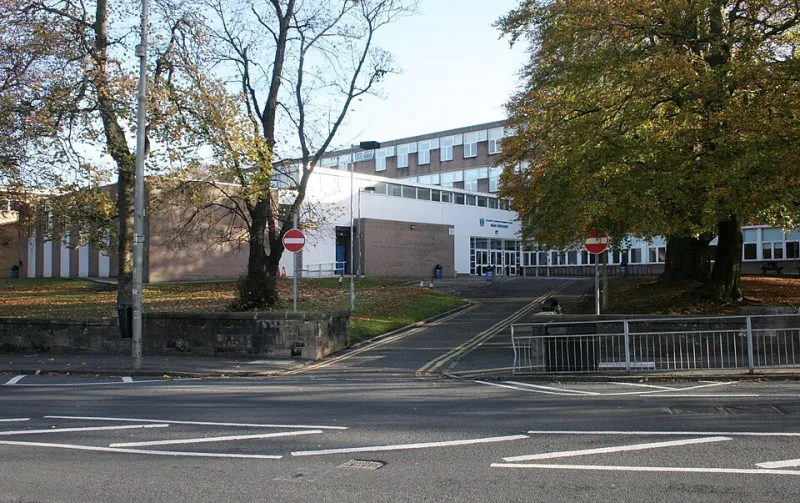
Photo by Photo by Tom Shakir on Unsplash on Unsplash
Ash dieback is not a single disaster but a slow subtraction. Since it was confirmed in Britain in 2012, Hymenoscyphus fraxineus has thinned hedgerows, weakened woodland edges and left foresters counting the ash that remain. In 2026, the search for lasting resistance has moved from conventional breeding towards gene editing, with researchers asking whether CRISPR can accelerate a defence that native ash may possess only rarely. The appeal is obvious. The risk is that a laboratory solution is asked to settle an ecological question too quickly.
Why ash is a special case
Ash is not an agricultural crop with a short rotation and a single market. It is a long-lived, wind-pollinated tree that shapes hedgerows, ancient woodlands and upland margins. Its loss affects more than timber. Ash supports invertebrates, lichens and fungi; its canopy influences soil and light; its deadwood is part of a woodland economy that takes decades to form. Any edited tree would therefore enter a system already under stress, not a blank field.
The biology is also less tidy than the headlines suggest. Ash dieback tolerance appears to be complex, likely involving many genes rather than one simple switch. Candidate edits might target pathogen recognition, cell-death responses, toxin tolerance or regulatory sequences that tune defence. Some approaches would remove a susceptibility gene; others would alter how a tree responds to infection. Each is plausible in a glasshouse. None is yet a woodland strategy.
What an edit would have to prove
A useful edited ash would need more than survival in a nursery. It would need resistance that holds across sites, soils and weather, and across the decades in which a tree matures. It would need to retain the ecological functions that make ash worth saving. It would need to avoid unintended effects on growth, wood quality or interactions with fungi and insects. And it would need to be comparable, in independent trials, with the best conventionally bred material and with natural regeneration from surviving trees.
That last point matters. Britain already has ash trees that have survived repeated exposure. Conventional breeding and seed collection from tolerant individuals are slower than editing, but they carry fewer regulatory and public-trust burdens. CRISPR may be most defensible as an addition to that work, not a replacement for it. The question is whether editing can add traits or speed that conventional breeding cannot, and whether the gain justifies the long shadow of a release decision.
The regulatory route between glasshouse and woodland
In England, the deliberate release of genetically modified organisms is governed by the Environmental Protection Act 1990 and the Genetically Modified Organisms (Deliberate Release) Regulations 2002. A field trial requires consent from Defra, with scientific advice from the Advisory Committee on Releases to the Environment and inspection work involving APHA. The Genetic Technology (Precision Breeding) Act 2023 created a separate route for precision-bred plants and animals in England, but its practical effect depends on secondary legislation, guidance and how tree species are treated. Devolved administrations take different approaches, which complicates any UK-wide woodland plan.
As of 2026, no edited ash has been planted in British woods. That is not a criticism of the science; it is a statement about the distance between a promising edit and an environmental release. A field trial of trees is not like a trial of a annual crop. Pollen can travel. Roots and fungi interact. A trial plot is an ecological intervention even when it is fenced and monitored. Regulators would need to see reproductive control, spatial separation, long-term surveillance and a clear exit plan if things go wrong.
Ecology beyond resistance
Resistance is not restoration. An ash tree that survives dieback but supports fewer invertebrates, or that crosses with wild ash in ways that alter woodland genetics, would not be a simple rescue. Because ash is wind-pollinated, gene flow is a central issue. Edited trees could be placed in areas with little wild ash, or engineered for delayed flowering, but containment in a woodland is never absolute. The honest question is not whether gene flow can be prevented entirely, but what level of it is acceptable and who decides.
There is also the matter of time. A field trial that lasts five years may tell us little about a tree that lives for a century. Monitoring would need to outlast the political cycle and the funding cycle. That demands institutions, not just permits: long-term plots, open data, independent ecological review and a commitment to remove material if evidence turns against it.
Consent in a landscape
Clinical trials recruit individuals who can give informed consent. Environmental release does not. The affected public is a landscape, a parish, a woodland owner, a walker, a community that values a familiar tree. That makes consent harder and more political. Consultation must be genuine, early and specific. Landowners need clear liability arrangements. Local people should be able to see what is being planted, why and where. If edited ash is presented as a rescue technology, failure would erode trust in both the technology and the institutions around it.
A defensible pathway would be staged and unglamorous: contained glasshouse work; small, monitored field trials with reproductive safeguards; independent ecological and social review; and a decision rule agreed in advance. CRISPR may eventually form part of Britain's response to ash dieback. It should not be asked to carry the whole answer. The woodland is the trial, and it deserves evidence that matches its timescale.