The Blood Spot Bargain: Should Newborn Screening Promise a Cure That CRISPR Has Not Yet Delivered?
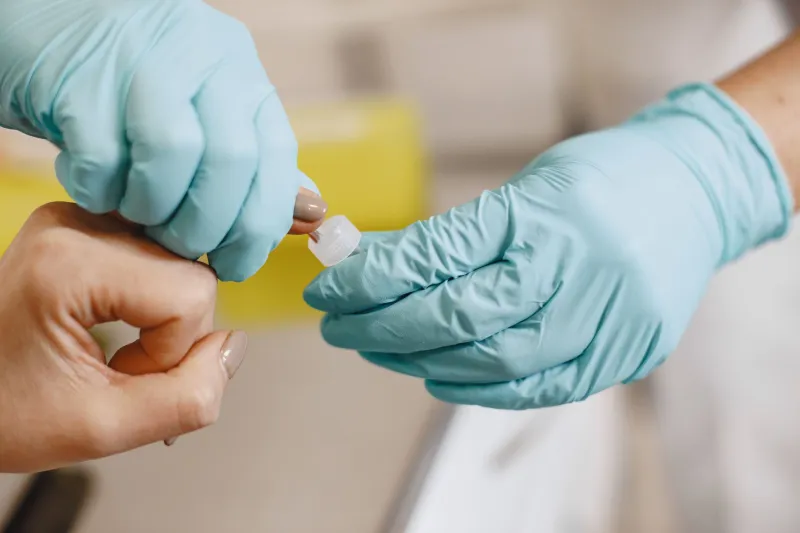
Every baby born in the UK is offered a heel-prick test at around five days old. A few drops of blood are collected on a card and sent to a laboratory. The NHS Newborn Blood Spot Screening Programme currently looks for nine conditions, including sickle cell disease, cystic fibrosis and congenital hypothyroidism. For parents, it is a routine moment in a crowded first week. For policy, it is one of the most consequential points where the health service meets the genome.
In 2026, a new question has moved from speculative to practical. Should the panel include conditions that CRISPR-based therapies can treat, or may soon be able to treat? The answer is not a simple yes. It depends on whether screening can offer something closer to care than to a promise.
The screening bargain
Newborn screening rests on a bargain. A test is offered to every family, not because the result is interesting, but because early detection changes what happens next. The UK National Screening Committee applies internationally recognised criteria: the condition must be an important health problem, the test must be accurate and acceptable, early detection must improve outcomes, and there must be an accepted treatment and care pathway.
Sickle cell disease shows why the bargain can work. Newborn screening identifies affected babies before infections become life-threatening. Penicillin prophylaxis, vaccination and parental education begin within weeks. The result is not merely a label. It is a route into care.
That is also why the CRISPR question is harder than it looks. A therapy can exist without a system being ready to deliver it.
The appeal of gene editing
The UK has been an early mover in CRISPR medicine. The MHRA licensed Casgevy, a CRISPR-based therapy, for sickle cell disease and beta thalassaemia. The treatment edits a patient’s blood stem cells outside the body and returns them after chemotherapy conditioning. It is not a tablet or an injection in a GP surgery. It requires apheresis, specialist centres, inpatient care, fertility counselling and long follow-up.
For some patients, it can amount to a functional cure. For the health service, it is a complex and costly intervention whose routine availability depends on appraisal, funding and capacity. A licensed therapy is not the same as an accessible one.
Beta thalassaemia is not currently part of the UK newborn blood spot panel. A test at birth could identify affected infants before symptoms appear. But what would early identification deliver in 2026? If gene therapy remains limited to a small number of specialist centres and tightly defined eligibility, a diagnosis may arrive years before a realistic treatment pathway. That is not early intervention. It is early uncertainty.
The evidence bar
The UK National Screening Committee does not add conditions because a technology is exciting. It adds them because the evidence supports a population-level programme. For CRISPR-treatable conditions, the sticking point is the treatment criterion. A therapy may be licensed by the MHRA and still not be routinely commissioned by the NHS. Screening that outruns reimbursement creates a moral debt: it finds children whose care the system cannot yet guarantee.
False positives compound the problem. Newborn screening is a risk assessment, not a diagnosis. Additional conditions increase the number of results that require confirmatory testing and counselling. Some will reveal carrier status, as sickle cell screening already does. Others may identify variants of uncertain significance. Parents may be told their child has a genetic change without being told what it means for their health.
Consent and communication
The heel-prick test is offered, not compulsory. Parents can decline. Adding conditions changes the information they need in order to make a meaningful choice. The word CRISPR can be misleading: it suggests precision and cure. In practice, gene editing for blood disorders involves chemotherapy, fertility risk and years of monitoring.
Screening materials must be honest about that gap. A result that says a child may one day be eligible for gene editing is not the same as a result that says treatment is waiting. Parents should not be left to infer that a cure is already on the ward.
Equity and geography
Gene therapies are concentrated in specialist centres. Families in Wales, Northern Ireland, Scotland and northern England may face long journeys for assessment and treatment. If screening identifies more babies with eligible conditions, capacity must follow. Otherwise screening widens the distance between diagnosis and care.
There is also a question of trust. Communities that have historically been poorly served by genetic services may view expanded screening with caution. Consent rates and follow-up must be monitored, not assumed.
A prudent path
The case for expansion is not binary. The UK National Screening Committee could use horizon scanning, managed introduction and real-world data collection. Conditions should be added only when a confirmed care pathway exists, including funding, specialist capacity and clear eligibility criteria. Consent materials should explain uncertainty rather than airbrush it.
CRISPR may eventually change what a newborn diagnosis means. It does not change the screening bargain itself. A small blood sample is exchanged for early help. Until the help is reliably available, Britain should be careful not to promise more than the blood spot can deliver.