The Prep-Room Prerequisite: Are UK School Labs Ready for CRISPR?
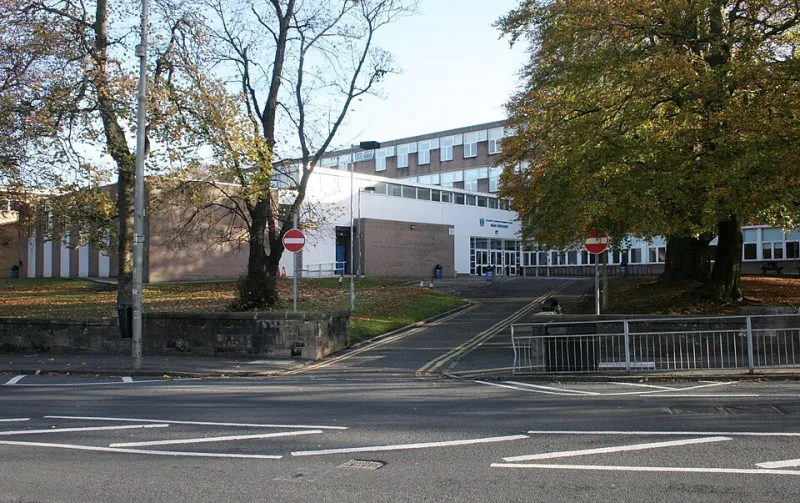
Photo: Richard Sutcliffe , CC BY-SA 2.0, via Wikimedia Commons
Low-cost CRISPR teaching kits have spent years on the edge of UK science education: a university outreach curiosity, a summer-school treat, a demonstration wheeled into a hall for an hour. In 2026 they are moving closer to the ordinary secondary lab. Suppliers advertise classroom-ready protocols, teachers share results online, and academy trusts ask whether the practical can be added to the enrichment timetable. The question is no longer whether pupils will encounter gene editing at school. It is whether schools can host it safely, teach it coherently and explain it honestly.
The case for the kit is straightforward. CRISPR is now a routine laboratory tool, and pupils who meet it only as a diagram miss the texture of modern biology: design, verification, failure and repetition. A well-run practical can teach pipetting, sterile technique, experimental controls and data interpretation. It can also make the ethical questions concrete. But a kit is not a curriculum, and a protocol is not a risk assessment.
A practical in search of a syllabus
At A-level, gene technologies appear in the specifications of AQA, OCR, Pearson Edexcel and WJEC/Eduqas. Yet the required practical endorsement in England does not include CRISPR, and the same is broadly true of equivalent arrangements elsewhere in the UK. The kit therefore sits mostly in enrichment, extended project work or university outreach. That is not a problem in itself. It becomes one if teachers are told the practical covers the specification when it does not, or if pupils are assessed on a technique their school cannot resource consistently.
Exam boards could help by saying plainly whether CRISPR is a required technique, an illustrative example or beyond scope. A clear statement would let departments plan equipment, technician time and assessment without guessing. Until then, school leaders should treat the kit as a valuable extension of practical work, not a substitute for the core syllabus.
The contained-use rulebook
Any school that cultures edited microorganisms is undertaking contained use of a genetically modified organism. In the UK that brings the Genetically Modified Organisms (Contained Use) Regulations 2014 into play, overseen by the Health and Safety Executive and advised by the Advisory Committee on Genetic Modification. Most classroom kits will be low risk and handled at containment level 1, but low risk is not no risk. The school still needs a named biological safety officer, a local risk assessment, trained staff, suitable facilities, inactivation and waste routes, and a spill plan.
Some kits avoid live GMOs altogether, using cell-free extracts or non-viable materials. Those may simplify regulation, but they do not remove the need for a risk assessment. Schools should check what the kit actually contains before deciding which framework applies. A purchasing decision made by a head of science should not bypass the school's safety adviser.
Training, not just a protocol
Teacher training is the bottleneck. A science teacher may be confident with gel electrophoresis and less so with designing a guide RNA or discussing off-target effects. CLEAPSS in England, Wales and Northern Ireland, and SSERC in Scotland, provide school-focused safety advice, but neither can substitute for continuing professional development. Schools need dry runs, clear troubleshooting and a named contact for containment questions. Technicians need time, not just thanks.
The practical also demands a different kind of lesson planning. Pupils must understand why a negative control matters, why a failed edit is not a failed experiment, and why results from a teaching kit cannot be extrapolated to a clinic. Those are teachable points, but they require a teacher who has had time to think them through.
The ethics lesson before the lab
Teenagers should not be shielded from the ethics of gene editing. They should be taught to distinguish somatic and heritable editing, to ask who benefits, and to recognise that a classroom experiment on yeast is not a preview of editing a person. The risk is not that pupils will learn too much. It is that they will learn a technique without the vocabulary to discuss its limits. A practical should be paired with a structured debate or written task, not left as a treat at the end of term.
Schools should also be careful about antibiotic-resistance markers. Even in disabled laboratory strains, markers conferring resistance to clinically important antibiotics deserve scrutiny, and disposal must follow established school guidance. This is a lesson in stewardship as much as in molecular biology.
What a sensible rollout looks like
A sensible rollout would have four elements: a curriculum statement from exam boards; a containment checklist from school safety advisers; funded continuing professional development for teachers and technicians; and an ethics module that is assessed, not optional. Schools should also publish a short statement of what the practical is for, so that parents and governors understand that pupils are editing non-human material under contained conditions.
The classroom edit is welcome. It should arrive through the prep room, not the front office: planned, risk-assessed and taught by staff who have had the training to make it meaningful.