Lab Coats, Grants and Spin-Outs: A UK Student's Field Guide to Gene Editing in 2026

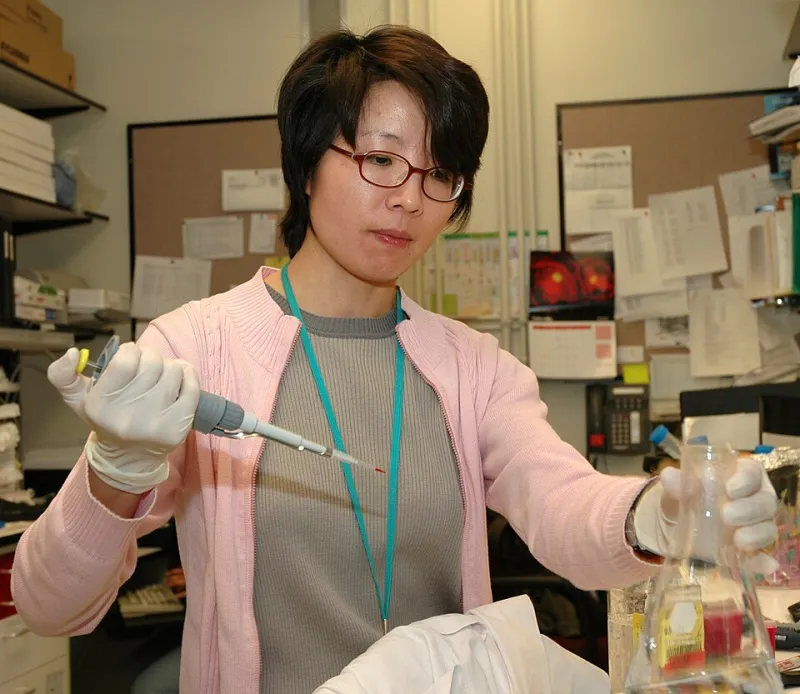
Photo: undergraduate students pipetting in a UK university genetics laboratory, via www.autobics.com
Why this question is being asked now
When the MHRA licensed Casgevy in late 2023, the UK became the first country to approve a CRISPR-based medicine. For a generation of undergraduates who had only encountered gene editing as a diagram in a lecture theatre, the announcement changed the register of the conversation. Editing was no longer a promise; it was a product with a label, a price and a patient information leaflet.
The consequence is a predictable surge of interest, and a predictable shortage of clear answers. British universities do not offer a degree called CRISPR. There is no single graduate scheme for gene editing. What exists instead is a set of well-trodden routes through molecular biology, computational science, regulation and venture building — routes that reward early planning and punish vagueness.
What follows is a practical map, not a guarantee. Fees, stipends and competition dates shift annually; verify every figure with the awarding body before you rely on it.
Choose the degree for its modules, not its name
Any well-foundationed degree in genetics, biochemistry, biomedical science or molecular biology will serve. The differentiator is what you can actually do at the bench and at a keyboard by the time you graduate.
Three capabilities recur in job adverts across the UK cell and gene therapy sector: aseptic mammalian cell culture, a working command of CRISPR screening workflows (library design, delivery, next-generation sequencing readout), and enough computational fluency to analyse the resulting data in Python or R. A degree that leaves you unable to do the third is a degree that limits you to a narrow set of roles.
Royal Society of Biology accreditation is a reasonable proxy for laboratory content, and integrated master's years (MBiol, MSci) reduce the number of funding transitions you have to navigate later. If a course offers a professional placement year in industry, treat it as a feature worth paying attention to. Sandwich placements in the Stevenage and Cambridge clusters are frequently the single most consequential item on a graduate CV.
The summer that matters more than your transcript
Vacation research experience is where curiosity becomes evidence. The learned societies are the least intimidating entry point: the Genetics Society and the Biochemical Society both run summer studentship schemes that fund undergraduates for short laboratory projects, and the Royal Society of Biology offers travel and training grants that are routinely under-subscribed relative to the number of eligible students.
At the larger institutes, competition is stiffer. The Wellcome Sanger Institute and the Francis Crick Institute host undergraduate summer programmes that attract international applicants, and applications typically close in the winter preceding the summer in question. A speculative email to a principal investigator whose recent paper you have actually read remains a legitimate strategy — but only if the email demonstrates that you have read it.
One honest caution: a six-week project will not produce a publication, and no supervisor expects one. What it produces is a referee, a technique and a sentence you can defend in an interview.
iGEM: the fastest route from curiosity to competence
iGEM remains the most efficient compression of the research cycle available to a student. Teams spend a summer designing, building and defending a synthetic biology project, then present at the Grand Jamboree in Paris. British institutions — among them Oxford, Cambridge, Imperial, UCL, Edinburgh, Warwick and Exeter — have a long record of participation.
The costs are real. Team registration, reagents, travel and accommodation typically run to tens of thousands of pounds, which means the first skill you learn is fundraising. That is not a distraction from the science; it is an accurate preview of how research is funded in practice. If your institution has no existing team, the process of founding one is itself a credential.
The postgraduate fork
For laboratory leadership, a doctorate is effectively mandatory. UKRI doctoral training partnerships and MRC-backed programmes fund the majority of UK life science PhDs, with stipends that in 2026 sit in the region of £20,000 tax-free, plus fee cover. Wellcome doctoral programmes and institute studentships offer alternatives with different selection rhythms; several close applications more than a year before the start date.
Before committing, be clear about which of two careers you are choosing. A discovery science PhD trains you to generate knowledge. An industry-facing PhD, often linked to a Catapult or a company partner, trains you to generate a process. Both are valuable; they are not interchangeable.
For those who want a shorter, more applied route, several UK universities now offer master's courses in cell and gene therapy, regenerative medicine or biotechnology enterprise. These are expensive and vary considerably in quality; ask for the employment destinations of the last three cohorts before you accept an offer.
The third path: policy, regulation and public dialogue
A significant proportion of the interesting work in gene editing happens away from the bench. The Human Fertilisation and Embryology Authority, the Medicines and Healthcare products Regulatory Agency, the Nuffield Council on Bioethics and the Parliamentary Office of Science and Technology all take on interns, fellows and secondees, and all struggle to recruit people who understand both the science and the statute.
The Royal Society's pairing scheme places researchers in Westminster for short periods; POST fellowships place them there for longer. These routes are less advertised than PhD programmes and considerably less oversubscribed than they appear.
Building something: clusters, catapults and accelerators
The UK's gene editing ecosystem is geographically concentrated. Cambridge, Oxford and London dominate discovery; Stevenage hosts the Cell and Gene Therapy Catapult, which provides manufacturing expertise that no academic lab can replicate; Edinburgh and Manchester have growing advanced therapy clusters.
For students inclined towards founding a company, Conception X and Entrepreneur First both take pre-seed founders without a finished product, and several universities now run their own venture-building programmes. Be realistic: the overwhelming majority of UK gene editing spin-outs begin with a doctoral or postdoctoral founder who has spent years inside a specific problem. The glamorous version of the story is rare; the unglamorous version is the norm.
An honest timeline
Undergraduate degree: three to four years. Relevant summer experience: one to three. Doctoral study: three and a half to four. Postdoctoral or industry training before founding anything: commonly two to five.
That is a decade. It is worth knowing now, because the field will still be there when you arrive, and the people who thrive in it tend to be the ones who planned for a decade rather than a term.