The Referral Filter: How Britain's Gene-Editing Trials Find Their Patients — and Who Never Gets the Letter
Photo: NHS research nurse discussing clinical trial with patient in UK hospital clinic, via lord-lieutenant-herts.org.uk
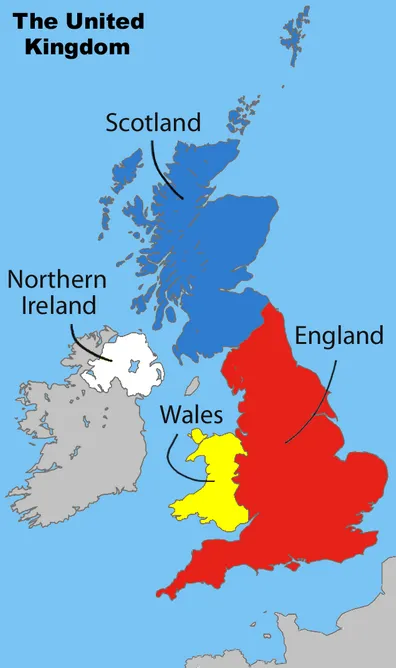
Recruitment maps for UK gene-editing studies have a distinctive shape. They cluster around a handful of teaching hospitals and specialist centres, with a scattering of satellite sites around them. The same neighbourhoods appear in cohort after cohort. That pattern is not, on its own, evidence of intent. It is the visible end of a referral system that begins long before a patient is handed a consent form.
The first patient in a CRISPR trial is often found through a specialist clinic, a clinician with a research interest, or a patient organisation that has spent years building trust with a rare-disease community. The second patient is harder. The third is harder still. By the hundredth, a study is no longer relying on the enthusiasm of a few champions; it is relying on routine NHS pathways to notice the right person at the right time. Britain has not yet built that routine for gene editing.
The map looks like the health service, not the country
It is tempting to read recruitment maps as a story about geography. In practice, they are a story about institutions. A trial site needs pharmacy capacity, a research nurse, a principal investigator with protected time, and a contract with the sponsor. Those things are unevenly distributed. So are the specialist clinics that see the patients most likely to be eligible: haematology centres for sickle cell disease and beta thalassaemia, inherited retinal disease services, metabolic medicine, neurology, immunology and rare-disease genetics.
Where those services sit, trials follow. Where they do not, patients may still be eligible, but nobody in their local hospital is positioned to notice. The result is a recruitment footprint that reflects the shape of research-active NHS trusts more closely than it reflects the shape of disease in the population.
This matters for CRISPR because many of the conditions now entering clinical trials are not evenly spread across the UK. Sickle cell disease, for example, is concentrated in urban areas with large African and Caribbean communities, including parts of London, Birmingham, Manchester and Leeds. Inherited blood disorders, metabolic conditions and rare genetic syndromes each have their own patterns. A trial that recruits only from specialist centres may be scientifically sound and still produce a cohort that is narrower than the disease it studies.
Who actually tells a patient a trial exists?
In the UK, the answer is more fragmented than the public might assume. A patient may hear about a study from a hospital consultant, a specialist nurse, a clinical trials practitioner, a patient charity, a newsletter, a social media post or, occasionally, their GP. The NIHR's Be Part of Research service exists to help people find studies, and the NHS Genomic Medicine Service has begun to make genomic testing a more routine part of care. But neither is a substitute for a clinician saying, in a consultation, that a trial might be relevant.
The most reliable route remains the specialist clinic. That is also the most concentrated route. A patient who attends a teaching hospital centre for regular review is far more likely to encounter a research conversation than a patient whose care is managed locally. The difference is not necessarily knowledge or willingness. It is proximity to the research infrastructure.
The GP paradox: gatekeeper but not signpost
General practice is where many patients first present, and where long-term conditions are monitored. It is also, for most gene-editing trials, a poor signposting route. GPs are generalists with crowded consultations. Unless a trial is directly relevant to a local pathway, they are unlikely to know it exists. Even when they do, the referral route may be opaque.
There are practical exceptions. Research-active GP practices, primary care networks involved in delivery, and practices with a research nurse can act as identification points. Some trials use patient identification centres to search records for potentially eligible patients, with clinician oversight. But these arrangements are patchy. They depend on local enthusiasm and capacity rather than a consistent national mechanism.
For families outside research-active networks, the effect is cumulative. They may never be told that a study exists. They may see a leaflet but not recognise themselves in it. They may be willing to travel but not know that travel support is available. They may prefer to be asked by someone they trust, and that person may not be in the room.
Beyond the teaching hospital: satellites, travel and trust
Satellite sites and mobile research teams can widen the map, but they are not a simple fix. A satellite clinic still needs trained staff, safe facilities and a way to manage consent and follow-up. Travel reimbursement helps, but time off work, childcare and the cost of repeated visits remain real barriers. For some communities, the legacy of medical mistrust is also a factor; a referral is more likely to be accepted if it comes through a relationship that has been built over time.
That is why patient organisations matter. Groups representing people with sickle cell disease, rare metabolic disorders and inherited eye conditions often know their communities better than any trial team. They can review plain-English materials, advise on consent conversations and help researchers understand why a study might be ignored. But they cannot replace a functioning referral pathway. They can only make a weak pathway more visible.
What would make the second patient easier to find?
The practical answer is not one intervention. It is a set of small, unglamorous changes. Trial teams could publish clear referral criteria in a form that local clinicians can act on. Specialist centres could routinely ask referring hospitals whether they have eligible patients. GP practices could receive short, specific alerts through existing research networks. Patient identification could become a standard part of trial set-up rather than an afterthought. Travel and time costs could be discussed at the point of referral, not after a patient has already said yes.
There is also a design question. Trials that require every visit to take place at a single teaching hospital will always recruit from a narrow radius. Trials that build in local follow-up, remote consent where appropriate, and satellite delivery may reach further. That is not a argument for lowering standards. It is an argument for designing recruitment around the way NHS care is actually delivered.
A practical test for 2026
A useful test for Britain's gene-editing sector is not whether a trial can recruit its first twenty patients from a specialist centre. It is whether a patient who has never attended that centre can be found, informed and supported to take part. That requires referral routes that work without a personal connection, and materials that make sense to people who have never heard of CRISPR.
The second patient problem is often described as a recruitment problem. It is better understood as an infrastructure problem. The first patient may always be found through a champion. The hundredth will be found through a system. Building that system is slower than announcing a trial, but it is the part that determines who benefits from gene editing in the NHS — and who reads about it afterwards.