Who Gets to Be Cured? Britain’s CRISPR Trials and the Representation Gap
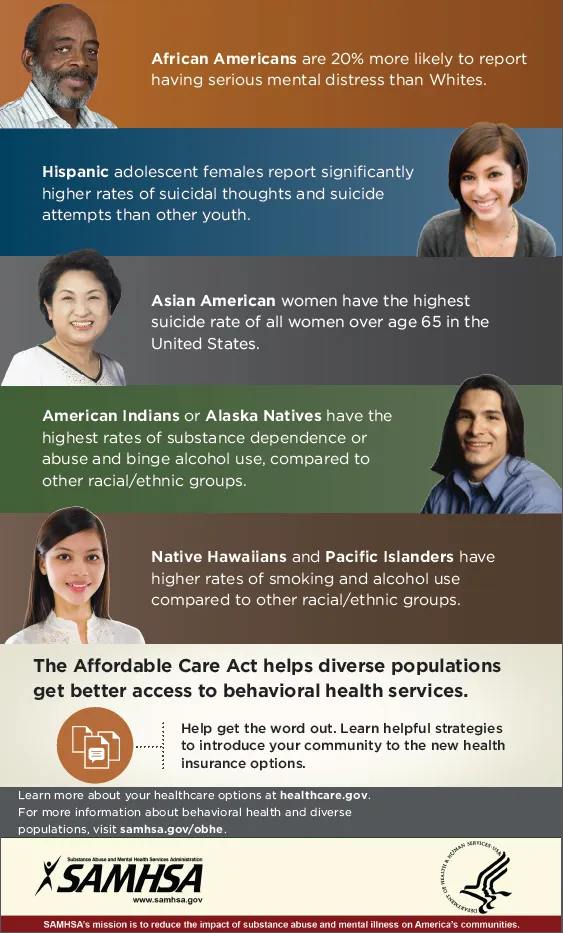
Photo: SAMHSA from Rockville, Public domain, via Wikimedia Commons
On a grey November morning in 2026, a research nurse at a teaching hospital in the Midlands is explaining what a CRISPR trial will ask of a patient: fortnightly visits, repeated blood tests, a lengthy consent form and a travel budget that may not stretch to the bus fare. The trial is scientifically elegant. The recruitment list is not. Most of the people who have agreed to take part live within an hour of the site, are already known to its specialists, and have the kind of job that allows them to take time off. Britain’s gene-editing research is advancing quickly. Its participant base is not advancing at the same pace.
The problem is not unique to CRISPR. Clinical research in the UK has long struggled to recruit in a way that mirrors the population it serves. But gene editing raises the stakes. These are not treatments that will be prescribed by every GP next year; they are complex, expensive therapies that will enter the NHS through specialist centres. If the evidence base is narrow, the eventual guidance will be narrow too. A trial that recruits from only one part of the country, or from one ethnic group within a condition, is not a national trial in any meaningful sense.
A sample that does not look like the ward
The reasons begin with the diseases themselves. Sickle cell disease, one of the most prominent targets for CRISPR therapy, is concentrated in people of Black African and Caribbean heritage in the UK. Inherited retinal dystrophies and familial hypercholesterolaemia have different demographic patterns. When a condition clusters in a community, a trial that fails to recruit from that community is not merely unrepresentative; it may be scientifically weak. Yet clustering also creates a trap. Researchers can assume that a condition is ‘hard to reach’ and design a trial around the patients who are easiest to contact, rather than the patients who most need the therapy.
Dr Aisha Rahman, a principal investigator on an early-phase gene-editing study at a northern teaching hospital, says the issue is often invisible in the protocol. ‘We write eligibility criteria that look neutral,’ she says. ‘Then we realise that requiring a stable address, or a particular kidney function, or a certain travel time, has already shaped the sample. Nobody intended to exclude anyone. The exclusions arrived through the paperwork.’
What the biology does—and does not—say
It is tempting to overstate the science of population differences. The careful position is this: allele frequencies vary between ancestries, immune genes such as HLA differ across populations, and responses to some medicines vary with genetic background. For CRISPR therapies, those differences may matter in specific ways. Ex vivo therapies, in which a patient’s own cells are edited outside the body and returned, avoid some of the immune problems of donor-based treatments. But the manufacturing process can still behave differently across patients, and in vivo delivery systems—viral vectors or lipid nanoparticles—may interact with pre-existing immunity that varies between groups.
That is a reason to collect data, not a reason to make assumptions. Ancestry is a crude proxy for genetics, and variation within any group is usually greater than variation between groups. The danger is that a small trial becomes the whole evidence base for a therapy, and the missing data are never noticed until the treatment reaches a broader NHS population. A neutral regulator cannot approve what a narrow trial never tested.
The pipeline problem
Recruitment is not only a matter of biology. It is a matter of buses, interpreters, childcare and trust. Trials are concentrated in specialist centres, often in large cities. Patients who live further away may be asked to travel repeatedly, sometimes without adequate reimbursement. Community doctors may not know that a trial exists, or may not have a route to refer a patient into it. And historical failures—from the legacy of medical racism to more recent concerns about data and consent—can make invitations to research feel less like an opportunity than an experiment.
Patient advocates argue that the solution starts before the consent form. ‘You cannot turn up three months before recruitment and call it engagement,’ says Femi Adeyemi, who works with a sickle cell support group in London. ‘People want to know who is running the trial, what happens to their samples, and whether anyone from their community was involved in designing it. Those questions are not obstacles. They are the trial.’
What trusts and regulators could do differently
The UK already has some of the machinery. The NIHR’s INCLUDE framework asks researchers to think about under-served groups, and the Health Research Authority expects transparency about recruitment. But frameworks are not the same as incentives. In 2026, three changes would make a difference.
First, diversity reporting should be routine and public. Trials should publish recruitment data by ethnicity, age, deprivation and geography, not as a footnote but as part of the results. Second, NHS trusts should treat referral routes as part of trial design. A study that depends on one specialist clinic is a study with a built-in bias. Third, regulators should ask a simple question at approval: who is missing, and why?
None of this is glamorous. It does not produce a striking editing efficiency figure or a dramatic cure narrative. But it determines whether CRISPR therapies will be tested on the Britain that exists, rather than the Britain that is easiest to recruit. The other ten percent are not a diversity statistic. They are the patients who will one day be told that the evidence does not quite cover them.
The science of gene editing is moving fast. The science of who takes part is moving more slowly. In 2026, that gap is the one worth closing.