The UK Gene-Editing Trial Map for 2026: Five Programmes, Honest Timelines and Questions Patients Should Ask

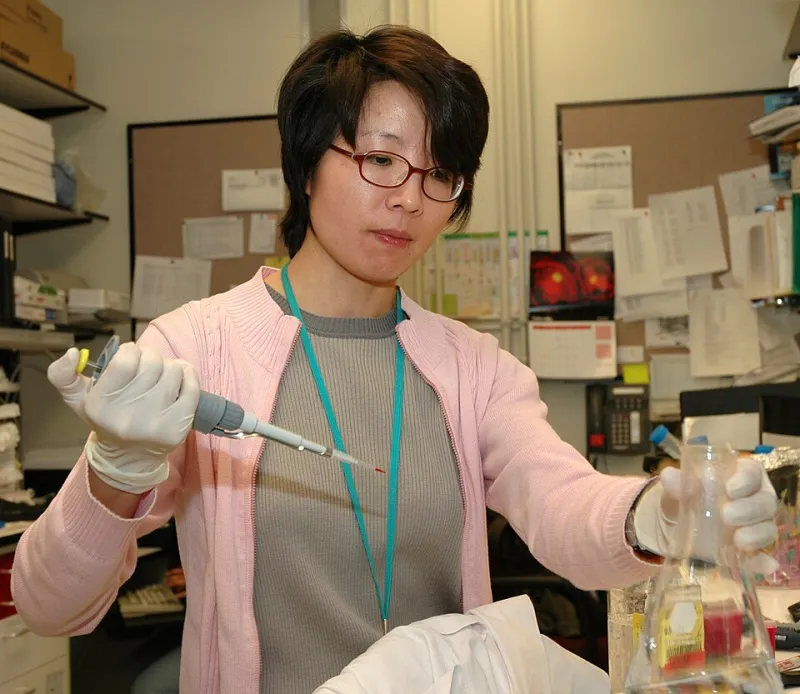
Photo: UK clinical trial laboratory CRISPR gene editing scientist, via i.pinimg.com
Gene editing is no longer a distant laboratory promise. In 2026, UK hospitals, university centres and specialist networks are taking part in studies that alter DNA to treat inherited disease. For patients and carers, the landscape is difficult to read: recruitment notices use technical language, eligibility rules are strict, and headlines often blur licensed treatments with experimental ones. This CRISPR Brief guide maps five programmes with UK relevance and sets out questions that matter more than the hype. It is not a recruitment advert, and trial status can change quickly.
1. Sickle cell disease and beta thalassaemia
These inherited blood disorders remain the most visible gene-editing story. The licensed therapy exa-cel, sold as Casgevy, uses CRISPR-Cas9 to edit a patient's own blood stem cells so that fetal haemoglobin is produced. It is available through specialist NHS centres for eligible patients with severe sickle cell disease or transfusion-dependent beta thalassaemia. That is a treatment pathway, not a clinical trial. Alongside it, next-generation trials are testing whether editing can be made safer, cheaper and more widely available, including approaches that avoid some of the burdens of stem-cell transplantation. Patients should ask whether a study uses myeloablative conditioning, what the follow-up period is, and whether the trial compares the edit with standard care.
2. Base editing for sickle cell disease
Base editing is a refinement of CRISPR that changes a single DNA letter without making a double-strand break. Several programmes, including BEAM-101 and related products, are designed to switch on fetal haemoglobin in a similar way to exa-cel. Early results have attracted attention, but the evidence base is still small and recruitment is usually limited to a handful of specialist sites. UK involvement in such studies has been anticipated rather than universal, so patients should not assume a local hospital is taking part. The key question is not whether the science is elegant, but whether the trial has published enough safety data for the phase being offered.
3. In vivo CRISPR for hereditary angioedema
Hereditary angioedema causes recurrent, sometimes life-threatening swelling. The condition is a strong candidate for in vivo editing because a single infusion could, in theory, reduce the need for regular injections. A phase 3 programme for NTLA-2002, an in vivo CRISPR therapy, has been running across multiple countries, with UK specialist centres among those involved in the wider development programme. Recruitment windows are narrow and eligibility depends on attack frequency, prior treatment and organ involvement. Patients should understand that the aim is usually reduction in attacks, not a guaranteed cure, and that long-term follow-up is part of the deal.
4. Transthyretin amyloidosis
Transthyretin amyloidosis is caused by a misfolded protein that builds up in nerves and the heart. NTLA-2001 uses in vivo CRISPR to knock down production of transthyretin in the liver. The programme has progressed through early and later-stage studies, and UK sites have been part of the international effort. For patients, the appeal is a possible one-off treatment in a condition that otherwise requires ongoing management. The caution is that cardiomyopathy and neuropathy progress differently, and trial endpoints may not capture every benefit that matters to patients.
5. Liver-directed base editing for high cholesterol
Familial hypercholesterolaemia is an inherited condition that causes very high LDL cholesterol from birth. Liver-directed base editing, including VERVE-102 and similar programmes, aims to switch off a cholesterol-regulating gene in the liver after a single infusion. This is early-phase science. UK recruitment has been limited and should be checked against registries rather than assumed. The realistic hope is a durable reduction in LDL cholesterol; the unknowns include off-target effects, immune reactions and whether the effect lasts for decades.
NHS, private and the cost of taking part
Most UK trial care is delivered through the NHS, often at specialist hospitals and NIHR-supported research facilities. Private hospitals may host trials, but referral routes and funding can differ. Taking part is not normally paid, although travel and inconvenience reimbursements are sometimes available. Patients should ask who is funding the trial, whether their GP will be informed, what happens if they withdraw, and whether follow-up continues after the study ends.
How to tell realistic hope from hype
A trial is not a treatment guarantee. Phase 1 studies ask mainly about safety; phase 2 studies look for signals of benefit; phase 3 studies compare against standard care. Headlines rarely make that distinction. Patients should check the UK Clinical Trials Gateway, Be Part of Research and the NIHR Be Part of Research service, and ask for the patient information sheet before agreeing to screening. A useful rule is simple: if a clinic cannot explain the phase, the endpoint and the main risks in plain English, keep asking questions.
Questions to ask before referring yourself
- Is this a trial or a licensed treatment?
- What phase is it, and what has already been published?
- Does it require chemotherapy, hospital stays or frequent travel?
- What are the known short-term and long-term risks?
- Who pays for travel, tests and follow-up?
- What happens if the treatment does not work?
Gene editing offers genuine hope for some inherited conditions, but it is not a single breakthrough that will help every patient. The UK's strength is its clinical research infrastructure; its challenge is making access fair and explaining uncertainty honestly. Patients and carers deserve both.