Minus 150 Degrees: The Unbuilt Infrastructure Behind Britain's CRISPR Therapies
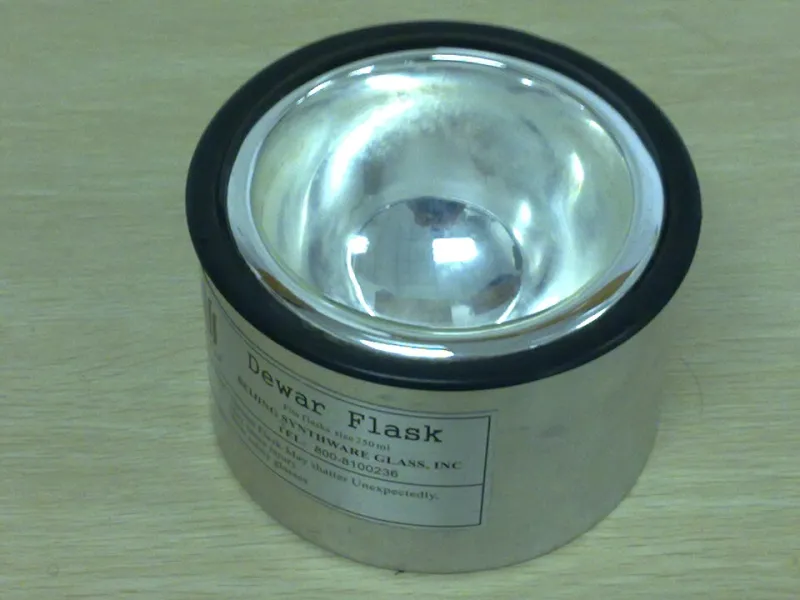
Photo: Seaborg, CC BY-SA 3.0, via Wikimedia Commons
Picture a Tuesday morning on a hospital loading bay in the north of England. A courier hands over a container roughly the size of a beer keg. Inside, suspended in nitrogen vapour at below minus 150 degrees Celsius, are a few millilitres of a patient's own cells — edited, expanded, tested and frozen weeks earlier at a manufacturing site hundreds of miles away. The handover takes minutes: a signature, a temperature log, a check that the identifiers match. Nobody photographs it. Yet this unremarkable ritual is where much of the promise of CRISPR medicine is quietly tested.
The unglamorous half of gene editing
Most coverage of gene editing concentrates on the edit itself: how precisely an enzyme cuts, how efficiently a repair template is copied, how few off-target changes appear in a sequencing readout. Those questions matter. But as the first generation of ex vivo cell therapies moves through UK trials and into commissioned services, attention is shifting to a different set of constraints — the cold chain, the paperwork and the people who stand between a frozen vial and a patient's bloodstream.
The argument is not that editing has been solved. It is that the next binding constraint may be logistical. A therapy that cannot be stored, shipped, traced and administered reliably is not a therapy in any practical sense, however elegant its molecular design.
What minus 150 degrees actually requires
Cryopreservation of therapeutic cells is not a matter of putting a vial in a freezer. Cells are suspended in a cryoprotectant solution, typically containing dimethyl sulfoxide, cooled under controlled conditions and held either in the vapour phase of liquid nitrogen or at similarly low temperatures. The equipment — dry vapour shippers, cryogenic storage dewars, monitored freezers — is specialised, expensive and needs a validated power supply, alarm system and someone on call when the alarm sounds at three in the morning.
Then there is the chain of identity. Autologous therapies are made from one named patient's cells, which means every transfer carries a risk of mix-up that a conventional batch-manufactured medicine does not. Sites therefore maintain a documented chain of custody, often supported by electronic systems, from apheresis chair to manufacturing suite to pharmacy bench. A temperature excursion or an identity discrepancy is not an inconvenience; it can mean a patient receives a second, punishing round of conditioning chemotherapy for nothing.
The patient is part of the supply chain
Clinicians describe the elapsed time between collecting a patient's cells and returning the finished product as the vein-to-vein interval. In autologous programmes it is commonly counted in weeks rather than days, and every stage has a queue: apheresis slots, manufacturing capacity, quality release testing, shipping, pharmacy receipt, and finally a bed.
That interval is clinical, not merely administrative. Patients often need bridging treatment while they wait, and some deteriorate enough to become ineligible. For a one-off therapy offered with curative intent, waiting is not a neutral experience. It is a period of real risk, and it is unevenly distributed, because the centres with the fastest turnaround tend to be the largest and best-resourced.
Pharmacy, not the lab, is where queues form
The receiving hospital has to be ready. Cell therapies arrive frozen and are usually thawed, sometimes washed, and released by a pharmacy team working under a manufacturing and import authorisation, within a quality system that satisfies the same standards as any licensed medicinal product. The product has a short shelf life after thawing — often measured in hours — so administration must be coordinated with the clinical team, the day unit and the patient's own arrival.
This is a genuine capacity question. Not every hospital that can run a trial can also store, handle and administer an advanced therapy at scale, and the skills involved are specific. The UK's network of advanced therapy treatment centres has done substantial work on this, but the number of sites able to offer a full service remains small relative to the patient population.
Distance, deprivation and the equity question
There is a second cold chain, and it is made of people. A patient who must travel repeatedly to a specialist centre for assessment, apheresis, conditioning and follow-up absorbs costs that no tariff captures: time off work, childcare, accommodation, and the strain on accompanying family members. For conditions such as sickle cell disease, which disproportionately affects communities with experience of disadvantage and, in some areas, of mistrust in health services, those burdens are not incidental.
A treatment that is technically available on the NHS but practically reachable only by those with the means to travel is not equally available. Policymakers tend to treat this as a transport problem. It is better understood as a design problem, and it argues for thinking about regional delivery, shared storage hubs and support packages at the same time as clinical commissioning.
What would actually help
Several unglamorous measures would make a measurable difference. Standardising chain-of-identity and temperature-monitoring systems across centres would reduce duplication and error. Investing in pharmacy and cellular therapy laboratory capacity, including out-of-hours cover, would shorten the thaw-to-infusion gap. Publishing honest vein-to-vein data by centre would let commissioners and patients see where the bottlenecks really are. And embedding travel and social support into service specifications would stop geography from silently rationing care.
None of this is scientifically novel. It is the kind of work that rarely attracts a press release and almost always determines whether a promising therapy becomes an ordinary part of care.
A test of the system, not the science
Britain has a credible research base in gene editing and a health system with a genuine commitment to adopting advanced therapies. The risk is that the country celebrates each new editing milestone while leaving the plumbing undersized. The cold chain is not an afterthought to CRISPR medicine; for patients, it is the part of the system they will actually experience. Getting it right is less exciting than a base-editing paper, and considerably more useful.